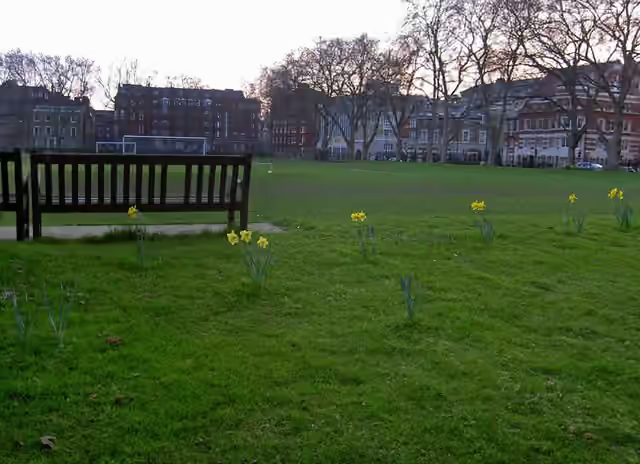
Westminster School playing fields at Vincent Square · Photo: Steve FLONNOW / THE SHORTLIST
Five worth knowing.
An editorial shortlist of London prep and junior schools, selected for documented curriculum breadth, primary-age provision and clear admissions routes. It is not an exam league table: comparable primary results are not available across every independent school. Prep schools may continue beyond Year 6; the relevant ages and entry points are stated below. Numbers are a reading order, not a quality score.
01
Westminster School playing fields at Vincent Square · Steve F · CC BY-SA 2.0Westminster
Westminster Under School
Independent · ages 4–13 · co-education transition
A central London prep pathway
The Under School expanded from September 2026 with a pre-prep and girls joining its entry points. Its provision now spans Reception to Year 8, so it covers the primary years and extends beyond them. A broad academic programme and central location make it worth considering for families seeking a structured prep route.
Before you decide
Check eligibility for the precise year group during the co-education transition. Current entry points include 4+, 7+ and 11+. For children joining at 4+ or 7+, progression to Westminster at 13+ remains subject to standard entry testing.
02
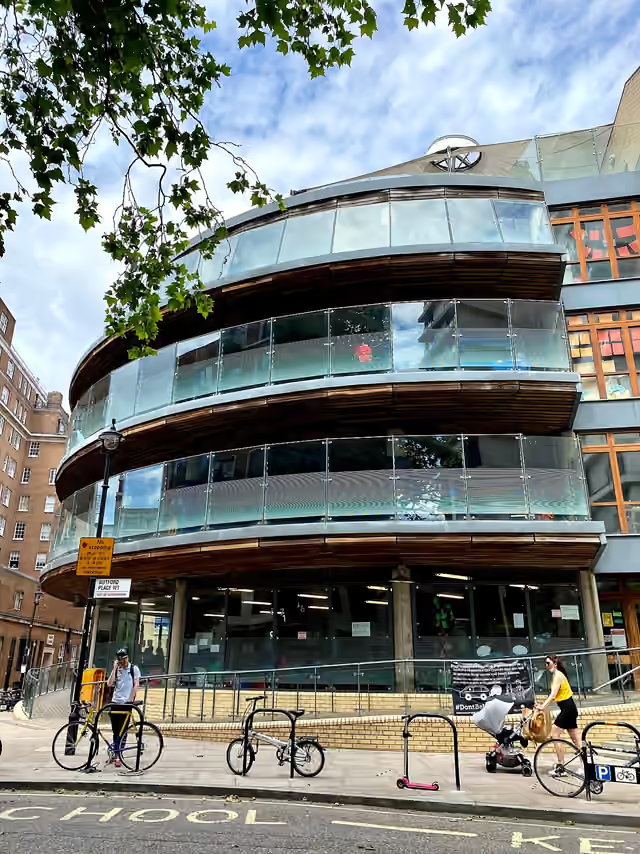
St Paul’s shared Barnes campus, science wing · ZeevoX · CC BY-SA 4.0Barnes · Richmond upon Thames
St Paul’s Prep School
Independent · boys · ages 7–13
Academic breadth from Year 3
Formerly known as St Paul’s Juniors, the prep school starts at seven and continues to thirteen. Its published curriculum includes languages, engineering, art, music and forest school alongside core subjects. It is a primary-age choice from Year 3, rather than a Reception school, and shares the wider St Paul’s campus in Barnes.
Before you decide
Start with the current 7+ admissions information; older references to entry points may be out of date. Compare fees, bursary eligibility, pastoral support and the journey to the riverside campus.
North London Collegiate’s Junior School combines academic work with music, drama, clubs and sport. Its documented 4+ and 7+ routes give families two main opportunities to apply during the primary years. We include it for the breadth of junior provision, rather than borrowing the senior school’s examination results as a measure of Reception teaching.
Before you decide
At 4+, the school uses age-appropriate activities; the 7+ route includes literacy and numeracy assessments. Check the full fee schedule and any assistance available for the relevant entry point.
Highgate’s Junior School covers Years 3–6 and describes a curriculum combining academic study with skills-based learning. Its purpose-built setting and co-educational community provide a contrasting north London option. Reception entry belongs to Highgate’s separate pre-prep provision; it is not the same application as joining the Junior School.
Before you decide
The main Junior School intake is at 7+. Check assessments, current bursary availability and progression arrangements, as well as the cost of clubs, meals and transport.
Alleyn’s Junior School combines a dedicated junior building with access to the wider Dulwich site. Its school introduction emphasises a broad curriculum, creative work and co-education. It offers a south London comparison for families who want a junior community within a larger school setting.
Before you decide
Current junior admissions information lists 4+, 7+ and 9+ entry. Distinguish Alleyn’s Junior School from Alleyn’s Oakfield, and confirm assessment, fees and senior progression for the school you intend to join.
01 IN FOCUS
Primary, junior or prep?
A primary school normally covers Reception to Year 6.
A junior school may begin in Year 3; a prep school may continue to Year 8. Check the actual age range and entry point before comparing these five choices.
A well-known senior school name does not establish the quality of every junior classroom.
02 IN FOCUS
Budget for the whole school day
Ask for the current fee schedule, including the tax treatment and compulsory extras.
Compare meals, after-school care, trips, music lessons and transport. Ask what happens at the next school transition and whether progression requires another assessment.
Scholarships and means-tested bursaries are different forms of support.
Create a decision file+
Compare entry, learning, cost and outcomes on the same basis.
01
Requirements
Use the current course or school admissions page.
02
Fit
Compare subject content and teaching, not only rank.
03
Budget
Model fees, housing, travel and visa costs where relevant.
04
Deadline
Track application, funding and acceptance dates separately.