 LONNOW.COM
WHAT’S ON
London parks: from royal landscapes to local green space
London’s green spaces can be the destination, the route between attractions or the quiet half of a busy city day.
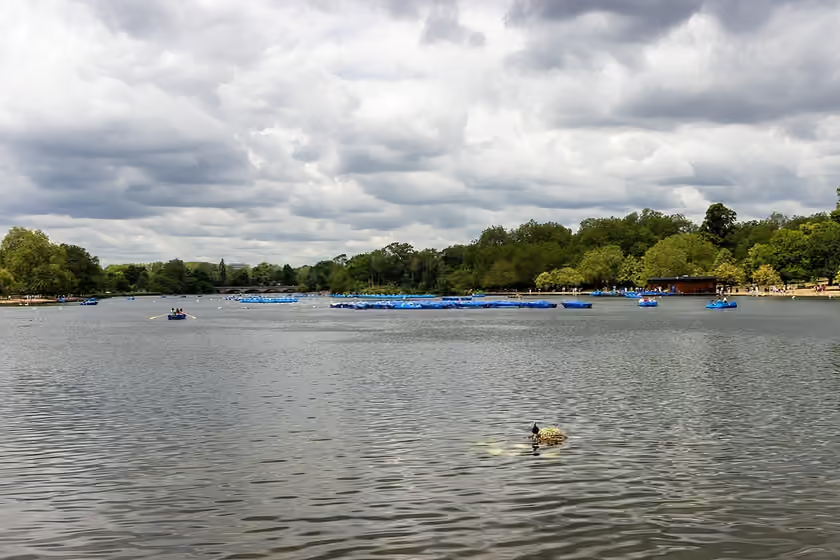

Match the park to the day
Large parks suit long walks and cycling; smaller central gardens can provide a short reset between museums, shops or meetings.
- Choose by
- Activity + travel
- Weather
- Check conditions
- Facilities
- Map before arrival
- Respect
- Local rules
On this page
Check seasonal conditions
Opening hours, events, sports, wildlife areas and path conditions can change.
Use the park operator’s current information. For a park visit on 25 December, Christmas Day in London provides the wider planning context for food, facilities and travel, which must still be checked separately from the park walk.
Plan the edges
Transport, cafés and facilities may cluster near particular gates.
Choose the entrance that fits the route rather than the park name alone.
Respect the landscape
Follow signs around wildlife, water, dogs, cycling and protected areas.
Take litter away when bins are full.
Choose an entrance, not only a park
Large parks can take a long time to cross and facilities cluster around particular gates.
Select the entrance that fits the desired landscape, nearest station, accessibility needs and next destination. Save the exit as well.
This matters in Richmond Park, Hampstead Heath and the Royal Parks, where a vague pin in the centre can create an unnecessary walk before the visit has begun.
Prepare for weather and ground conditions
London weather can change quickly and open ground may feel colder or wetter than surrounding streets.
Check paths, daylight and temporary closures, especially after heavy rain or during events. Wear suitable footwear and carry water.
In hot weather, plan shade and do not assume every fountain or café is operating. Follow current fire, swimming and wildlife guidance.
Use green space responsibly
Keep distance from wildlife, respect protected habitat and follow rules for dogs, cycling, barbecues, drones and amplified sound.
Busy lawns are shared public space, not private event venues. Take litter away when bins are full.
If meeting a group, choose a precise landmark rather than a broad park name and avoid blocking gates or narrow paths.
Choose the right kind of green space
Richmond Park, Hyde Park, Hampstead Heath, Greenwich Park and a neighbourhood garden offer different scales, surfaces and travel demands.
Decide whether the priority is a long walk, playground, picnic, sport, viewpoint, wildlife or quiet seating. A smaller local park can be the better choice when the journey would consume the available daylight.
Map the entrance and facilities
Large parks have multiple gates, and the nearest station may not lead to the most useful entrance.
Save toilets, playgrounds, cafés, accessible routes and meeting points before setting out. Opening hours, vehicle access, events and facilities can change seasonally.
Use the responsible park authority for current notices rather than an old map screenshot.
Plan for surfaces and weather
Rain changes grass, slopes and unpaved paths; heat changes shade, water and rest needs.
Bring layers, protect food from wildlife and follow local cycling, dog and barbecue rules. For a late visit, check gate times and the route back to a lit street or station.
Leave enough margin for a large park to take longer than its map suggests.
Continue exploring
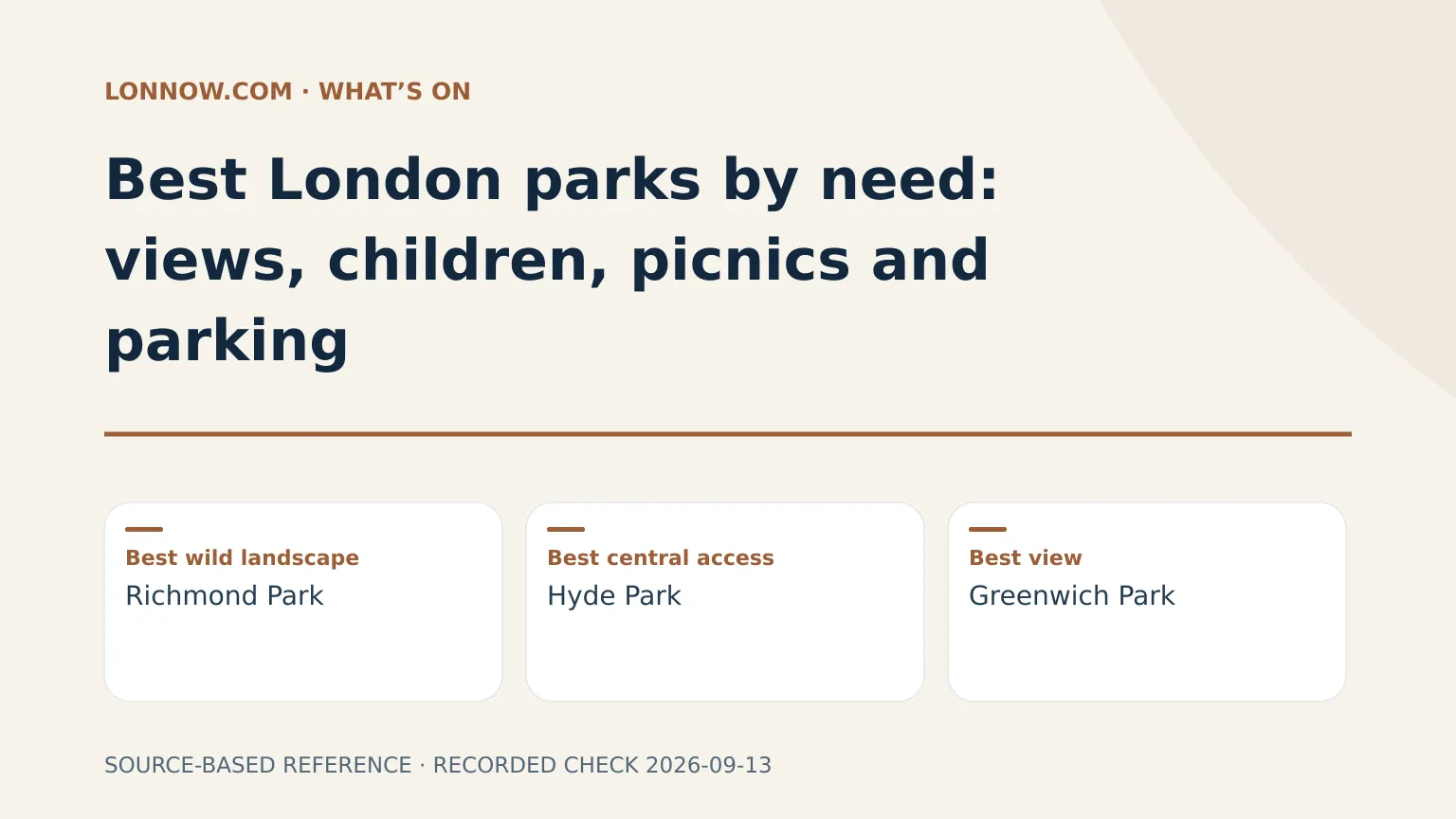
Best London parks by need: views, children, picnics and parking
The best London park changes with the day. Compare the capital’s major green spaces by scenery, children’s play, picnic fit, walking load, parking and the easiest public-transport approach.
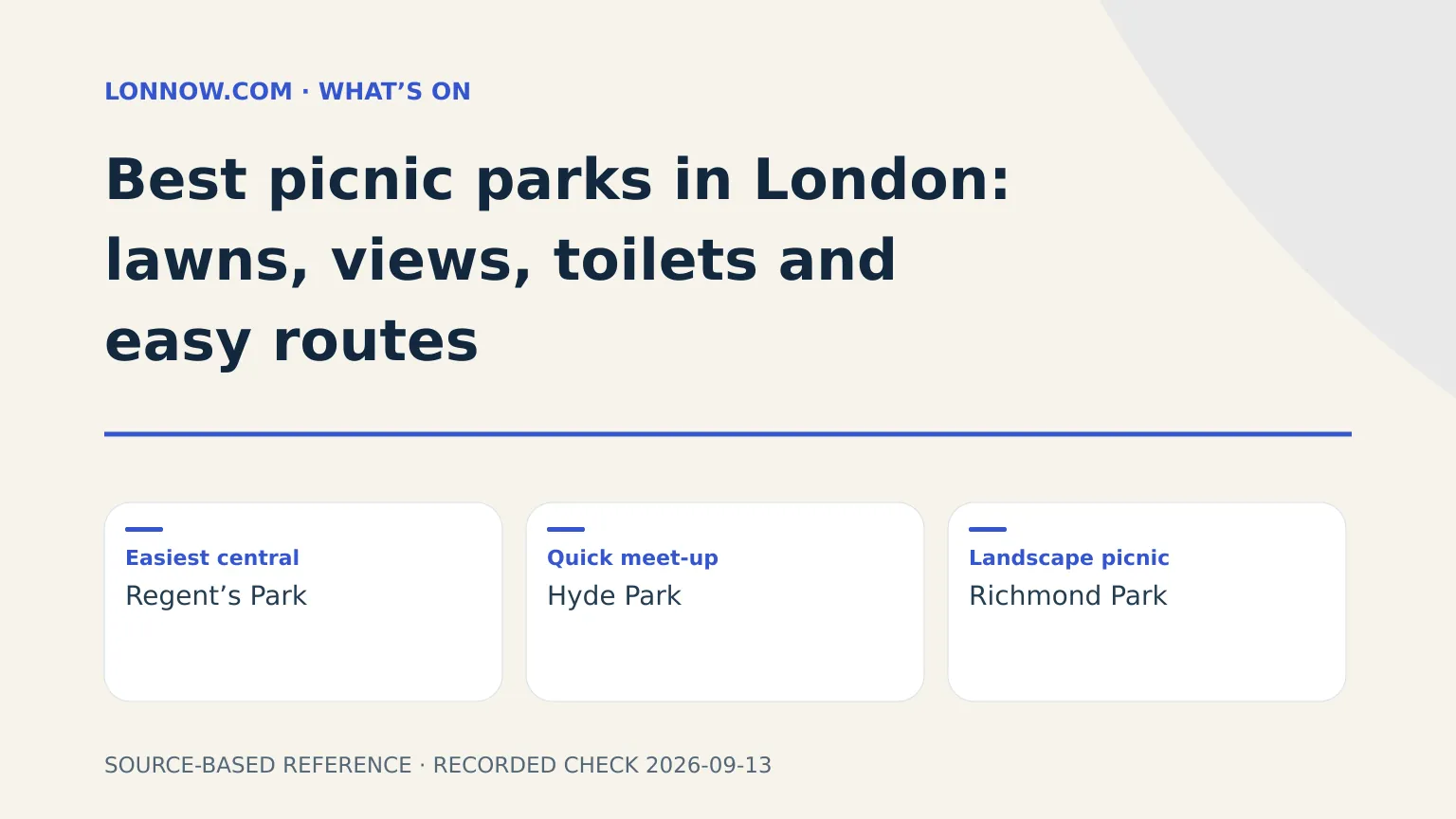
Best picnic parks in London: lawns, views, toilets and easy routes
Five London picnic starting points compared by lawn character, journey friction, toilets, food backup, shade, parking confidence and what to verify before spreading the blanket.
London for free
London’s strongest free day combines a permanent collection, a public landscape and a neighbourhood route—without pretending every special exhibition costs nothing.