 LONNOW.COM
WHAT’S ON
London markets: food, flowers, antiques and local character
Markets work best when you choose by purpose and arrive at the right time, not when you try to collect famous names.
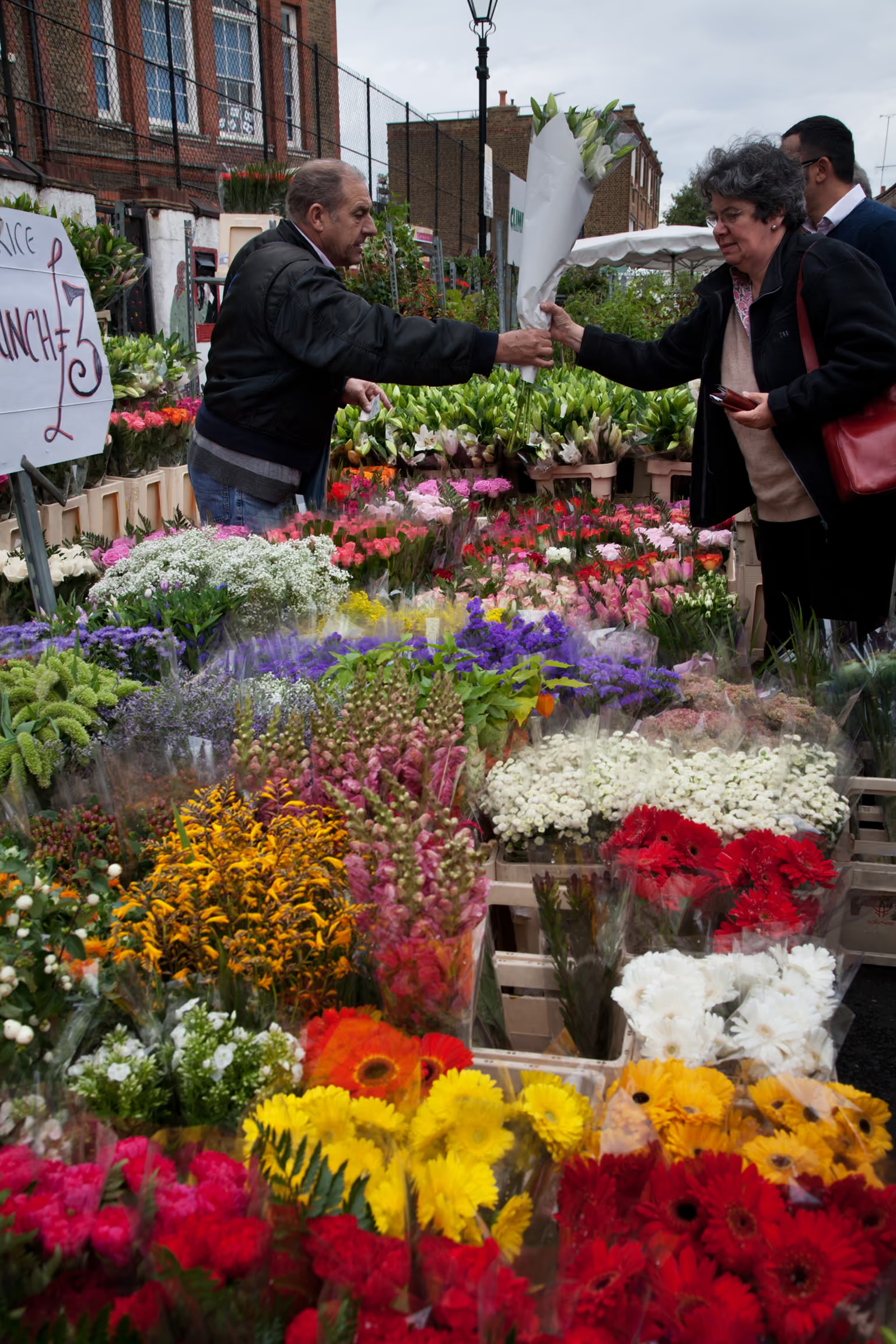
Choose the market type
Food, antiques, flowers, fashion and neighbourhood produce attract different traders and crowds.
Check the market’s official schedule.
- First check
- Correct trading day
- Best time
- Purpose-dependent
- Payment
- Carry a backup
- Route
- Pair with the area
On this page
Arrive with a plan
Early visits can mean more choice; later visits can mean atmosphere and larger crowds.
Carry a backup payment method.
Explore beyond the stalls
Build a short local walk around the market so the journey still works if it is busy or a trader is absent.
Buy with care
Check condition, returns and authenticity for higher-value goods.
Street-market charm is not a substitute for clear seller information.
Match the market to its trading day
Some markets change character across the week and individual traders do not attend every session.
Use the operator’s current schedule and trader information before crossing London. Decide whether the priority is produce, street food, antiques, flowers, clothing or atmosphere.
A famous market visited on the wrong day can feel like a different place from the one described in older guides.
Set a spending and carrying plan
Street food, small purchases and cash-only stalls can add up quickly.
Carry a secure payment alternative and enough bag space, but avoid displaying valuables in dense crowds. For food to take home, consider temperature and travel time.
For fragile or high-value goods, ask about receipts, provenance, returns and delivery rather than making a rushed decision at a busy stall.
Respect the neighbourhood
Markets are workplaces and often sit inside residential streets.
Keep entrances clear, follow waste instructions and do not photograph people or stalls intrusively. Explore nearby independent businesses rather than treating the market as an isolated attraction.
When crowds become uncomfortable, a pre-planned café, canal walk or smaller market can preserve the day without forcing a poor experience.
Choose the market type
Borough Market, Portobello Road, Columbia Road, Camden and specialist neighbourhood markets serve different purposes.
Decide whether the priority is produce, ready-to-eat food, antiques, flowers, fashion or street atmosphere. A market name can describe several streets and trading patterns, so confirm the section and day that match the visit.
Timing changes the experience
Early arrival can improve space and selection; later arrival may create more atmosphere but less stock and longer queues.
Some traders operate only on particular days or leave before the advertised market close. Check the market authority or organiser, then treat individual trader attendance as changeable.
Carry a payment backup and ask the price before ordering.
Turn the market into a neighbourhood route
Pair Borough with Bankside, Columbia Road with Shoreditch or Bethnal Green, Portobello with Notting Hill and Greenwich Market with the park and maritime sites.
One nearby cultural or green-space stop makes the journey worthwhile if weather, crowds or trader availability disappoint. Respect residents and keep doorways and pavements clear.
Continue exploring

London parks: from royal landscapes to local green space
London’s green spaces can be the destination, the route between attractions or the quiet half of a busy city day.
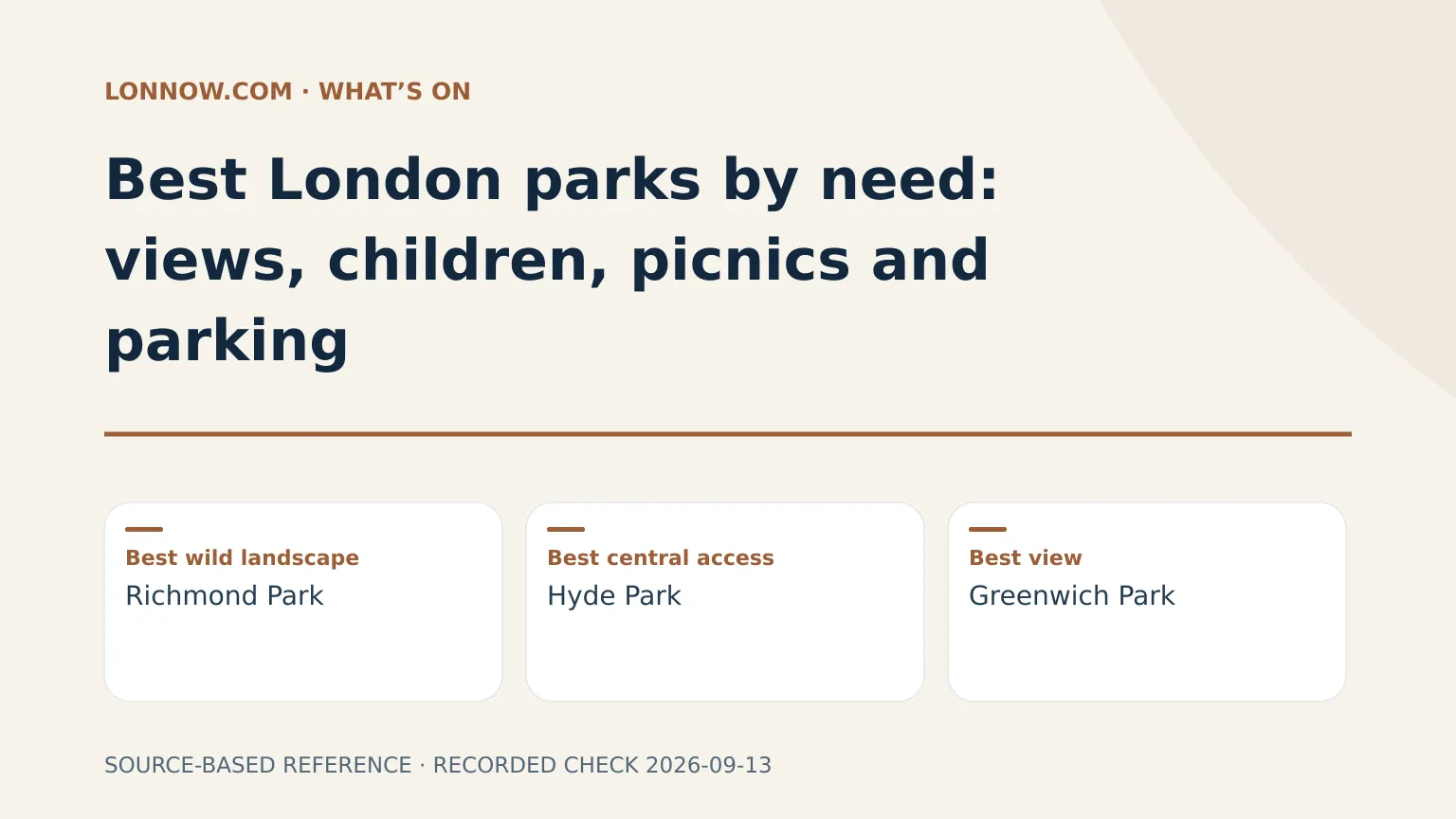
Best London parks by need: views, children, picnics and parking
The best London park changes with the day. Compare the capital’s major green spaces by scenery, children’s play, picnic fit, walking load, parking and the easiest public-transport approach.
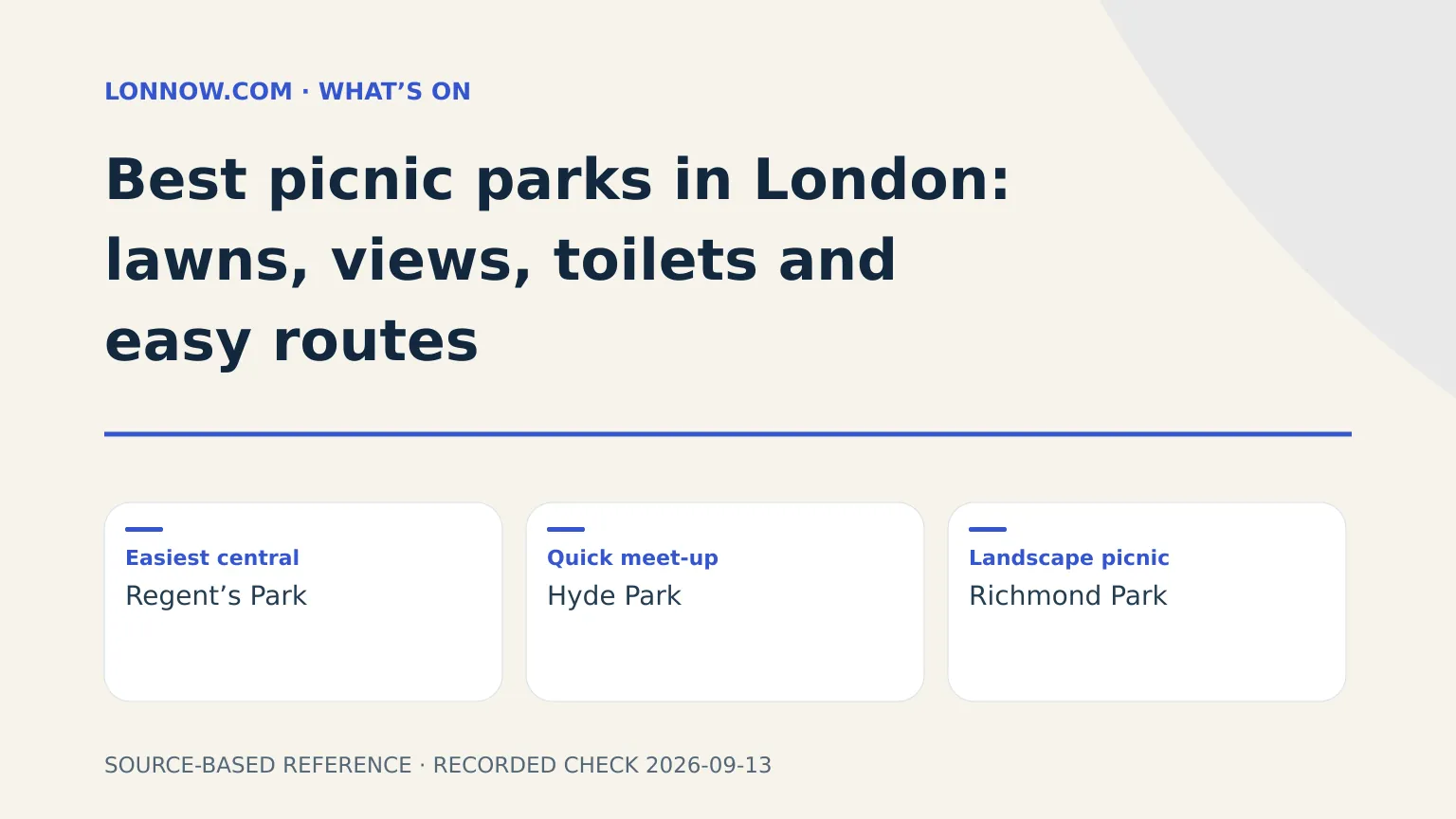
Best picnic parks in London: lawns, views, toilets and easy routes
Five London picnic starting points compared by lawn character, journey friction, toilets, food backup, shade, parking confidence and what to verify before spreading the blanket.